
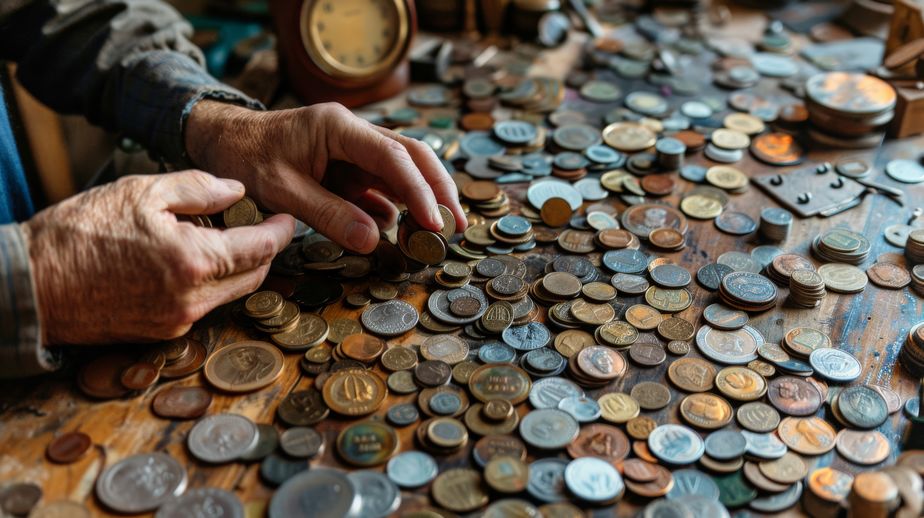
Opening a forgotten drawer or storage box and discovering coins or stamps can be both exciting and confusing. Many people find themselves holding albums, envelopes, tins, or small boxes filled with collectibles that once belonged to a parent, grandparent, or other relative. There may be no labels, no order, and no explanation. Pieces might be missing. Some items may look ordinary while others seem older or unusual. A common assumption quickly follows. If this collection is not complete, maybe it is not worth much.
The truth is that most collections are partial. Very few collectors ever finish every set they start. Life changes, interests shift, pieces get sold, traded, lost, or gifted away. From an appraisal standpoint, this is expected. Partial collections are not unusual. They are the norm. At Centennial Auctions, we work with them every day, especially for families settling estates or inheriting personal property. Knowing what to expect from the appraisal process can make the experience far less intimidating.
A Partial Collection Can Still Hold Significant Value
Completeness does matter for certain collectible series, but it is not the only factor that determines value. One rare coin tucked into a group of common ones can raise the worth of the entire collection. A single early stamp, a scarce printing variety, or a desirable condition grade can have strong market demand. Many inheritors are surprised to learn that the most valuable piece in a collection is often not the one that looks the oldest or most impressive at first glance.
Collectors themselves often built their collections gradually. They bought what interested them, skipped issues they did not care for, or focused on narrow themes. Some started projects they never finished. Others collected opportunistically rather than systematically. As a result, most inherited collections appear random to someone outside the hobby. Professional appraisers understand these patterns and know how to evaluate material regardless of how complete it is.
What Happens When You Bring in a Partial Collection
If you schedule an appraisal, you do not need to organize or research anything beforehand. In fact, leaving items in their original state can help preserve context and prevent accidental damage. Once in the hands of an appraiser, the collection goes through a structured evaluation process.
First, items are sorted into logical groups. Coins may be arranged by country, denomination, era, or metal type. Stamps are grouped by issuing country, time period, or postal category. This step alone often reveals that a collection is more diverse than originally expected.
Next comes identification and authentication. Professional appraisers examine details that most people never notice. For coins this may include mintmarks, die varieties, metal composition, and strike characteristics. For stamps this may involve paper type, watermarks, perforations, ink, and cancellations. Authentication protects inheritors from unknowingly selling counterfeits or misidentified material.
Condition is then assessed. In collectibles, conditions can dramatically affect price. Two identical coins can have very different values based on surface preservation. Stamps are evaluated for centering, gum condition, tears, stains, and hinge marks. Even small differences matter in the collector market.
Finally, current market data is reviewed. Appraisers compare items to recent auction results, dealer sales, and collector demand trends. This ensures valuations reflect real world selling conditions rather than outdated guidebook prices.
Centennial Auctions provides appraisals that comply with Uniform Standards of Professional Appraisal Practice. This is especially important when collections are part of estates, insurance documentation, or legal proceedings. The final report gives a clear picture of what the collection contains and its fair market value.
Random Does Not Mean Meaningless
Many inheritors apologize for bringing in a disorganized or incomplete collection. There is no need. Appraisers expect exactly that. In fact, some of the most interesting discoveries come from boxes that appear scattered or mixed.
Common surprises in partial collections include key date coins hidden among everyday issues, early foreign stamps mixed with modern postage, obsolete paper currency, or varieties that the original collector never recognized. Without professional review, these pieces could easily be overlooked or undervalued.
Even when a collection contains mostly common material, there is still value in understanding what it is worth. This prevents accidental disposal of collectibles that still have active resale markets.
Common Concerns from Families and Heirs
People new to collecting often have similar questions.
- Do I need to research anything before bringing the collection in? No, research is required. Appraisers are trained to handle unidentified material.
- What if I only want to sell part of the collection? Many families choose to keep sentimental pieces and sell the rest. An appraisal can provide values for individual items so you can make those decisions confidently.
- What if the collection is not valuable? Not every collection contains rare items, but an appraisal still provides clarity. You avoid uncertainty, mistaken assumptions, or unnecessary storage costs.
- Is the appraisal worth doing if the collection is small? Yes. Small collections can still contain valuable individual pieces. A professional review ensures nothing important is missing.
Options After the Appraisal
Once the collection is evaluated, the next step is deciding what to do with it. Some families choose to consign the collection to auction. Auctions connect material with knowledgeable collectors who understand its value, often producing stronger results than selling directly to dealers or guessing prices online.
Others prefer private sales, charitable donation documentation, or dividing pieces among family members with guidance on fair distribution. Centennial Auctions offers consultation services to help choose the best path forward based on your goals.
Respecting the Story Behind the Collection
Behind every inherited collection is a person who took time to gather those pieces. Whether they were a serious collector or simply curious, their hobby represented years of interest and personal enjoyment. Handling these collections with care and professionalism honors that effort. Many families express relief after an appraisal because they finally understand what their loved one built.
Taking the First Step
If you have inherited coins or stamps and feel unsure where to begin, start with an appraisal. You do not need a complete set. You do not need collecting knowledge. You simply need someone experienced to look carefully and explain what you have.
Partial collections are not unfinished projects to worry about. They are opportunities to uncover history, value, and stories that deserve attention.
For more than thirty years, Centennial Auctions has helped New England families, attorneys, and estate administrators navigate exactly these situations. Whether your collection is large or small, organized or scattered, professional guidance can replace uncertainty with understanding.
When you are ready to find out what your collection truly holds, we are ready to help. Contact us today at 603-356-5765 today or visit us online for more information!